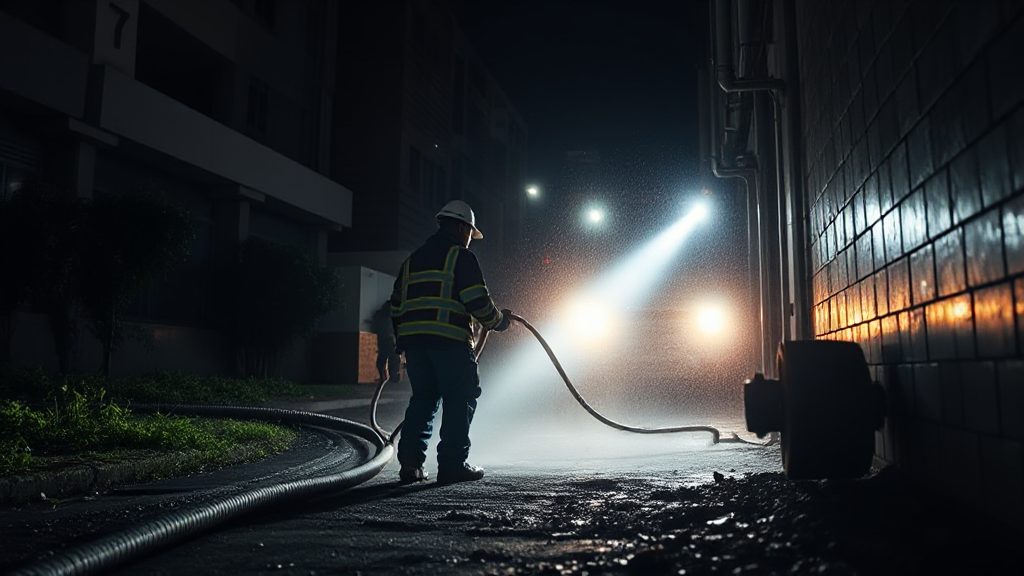
Midnight in Campo Limpo: Inside a 24h Drain Callout
At 1 a.m. in Campo Limpo, a phone rings at the dispatch desk, and a sequence begins that most residents never see. This piece follows one night emergency from the first ring to the final flow test, narrated by the dispatcher who took the call. If you are searching for a desentupidora Campo Limpo São Paulo SP at an hour when most offices are closed, this is what actually happens after you hang up.
The First Ring: Triage at the Dispatch Desk
The call comes from a ground-floor apartment on a residential street near the Campo Limpo terminal. Water is backing up through the kitchen drain and the toilet gurgles when the shower runs. The dispatcher asks three quick questions: is sewage visible, is water rising fast, and is there a child or elderly person in the unit. Those answers set the priority level.
Within two minutes, the address is logged, the caller is told to stop using water, and a technician is selected based on the equipment the job likely needs. A simple clog gets a manual auger and a small electric snake. A suspected main-line blockage gets the hydro-jetting truck. The dispatcher does not guess; the questions are designed to route the right crew the first time.
Dispatch: Matching the Crew to the Clue
Backups that appear in multiple fixtures at once usually point to a blockage past the building’s internal branch lines. That is a different job from a single slow sink. The dispatcher flags the address as a likely main-line case and assigns a two-person team with a camera inspection reel.
While the van is en route, the caller receives an estimated arrival window. This is the part most people underestimate: a desentupidora Campo Limpo callout at night is not just a van with a plunger. It is a coordinated response with equipment matched to the symptom, and the dispatcher stays on the line if the situation escalates.
What the Dispatcher Checks Before the Van Moves
- Whether the property is residential, commercial, or a condominium with a shared line
- Whether the backup is clear water, grey water, or sewage
- Whether there is a cleanout accessible on the property
- Whether the caller has had the same problem in the last six months
That last question matters. A recurring backup is a symptom of a structural issue, not a one-off clog, and the crew will arrive prepared to inspect rather than just clear.
On Site: Diagnosis Before Any Tool Goes In
The van arrives, and the technician walks the property before touching a drain. He checks the cleanout, listens to the pipes, and confirms which fixtures are affected. In this callout, the cleanout in the service area is full and slow to drain, which confirms a blockage downstream of the building.
The camera goes in first. On the monitor, the crew sees a grease-and-paper mass about eight meters along the line, with roots beginning to intrude at a joint. That combination is common in older Campo Limpo buildings where clay or cast-iron lines have been in service for decades.
Why the Camera Comes Before the Snake
Running a snake blind can push a blockage deeper or damage a fragile pipe. The camera tells the crew where the obstruction sits, how far it extends, and whether the pipe itself is intact. Only then does the technician choose between mechanical clearing and hydro-jetting.
For this job, the mass is soft enough for hydro-jetting. The truck’s hose is fed into the cleanout, and the crew works in short passes, pulling debris back toward the access point rather than driving it forward.
Clearing, Testing, and the Final Flow Check
After three passes, the line runs clear on the camera. The technician does not stop there. He runs every fixture in the apartment simultaneously — kitchen, bathroom, and the service-area drain — and watches the cleanout for any sign of backup. This is the final flow test, and it is the step that separates a real fix from a temporary unclogging.
Only when the water drains freely with no gurgling does the crew pack up. The dispatcher logs the result, notes the root intrusion at the joint, and recommends a follow-up inspection within a few months. The caller receives a short summary of what was found and what to watch for.
For residents who need the same kind of after-hours response, a desentupidora em Campo Limpo São Paulo SP that runs a genuine 24h dispatch line is the difference between a controlled callout and a flooded apartment by morning.
| Stage | What Happens | Typical Time |
|---|---|---|
| Call intake | Triage questions, priority set | 2–5 minutes |
| Dispatch | Crew and equipment assigned | 5–15 minutes |
| On-site diagnosis | Camera inspection, cleanout check | 20–40 minutes |
| Clearing | Hydro-jetting or mechanical snake | 30–90 minutes |
| Final flow test | All fixtures run, cleanout watched | 10–20 minutes |
Times vary with access, pipe condition, and whether the blockage reaches the public main. A straightforward internal clog can be resolved in under an hour; a main-line obstruction with root intrusion can take most of the night.
What This Callout Teaches About Night Drain Emergencies
The pattern repeats across Campo Limpo: a backup that seems sudden is usually the result of months of slow buildup. Grease, paper, and roots do not announce themselves until the line is nearly closed. By the time water backs up at 1 a.m., the blockage has been forming for a while.
That is why the dispatcher’s questions and the technician’s camera check matter more than the speed of the van alone. A fast arrival with the wrong tool wastes time. A matched response — right crew, right equipment, diagnosis before clearing — is what actually ends the emergency.
If you live in the area and keep this sequence in mind, you will know what to expect when you call. You will also know which questions to answer clearly, which fixtures to stop using, and why the technician insists on running every tap before leaving. The night shift runs on routine, and the routine exists to protect your home.
Frequently Asked Questions
How quickly can a desentupidora arrive in Campo Limpo at night?
Arrival depends on traffic and crew availability, but a 24h dispatch line typically gives an estimated window at the time of the call. The dispatcher assigns the nearest available team with the right equipment for the reported symptom.
Should I stop using water while waiting for the crew?
Yes. Running taps, flushing toilets, or using the washing machine adds water to an already blocked line and can cause a backup to overflow into the unit. Stop all water use until the technician confirms the line is clear.
Why does the technician inspect with a camera before clearing the drain?
A camera shows the location, size, and nature of the blockage, and whether the pipe is damaged. Clearing blind can push debris deeper or harm a fragile line, so the inspection protects both the property and the repair.
What is the final flow test, and why does it matter?
It is the step where every fixture is run at once while the cleanout is watched for backup. If water drains freely with no gurgling, the blockage is genuinely cleared rather than just moved aside.